

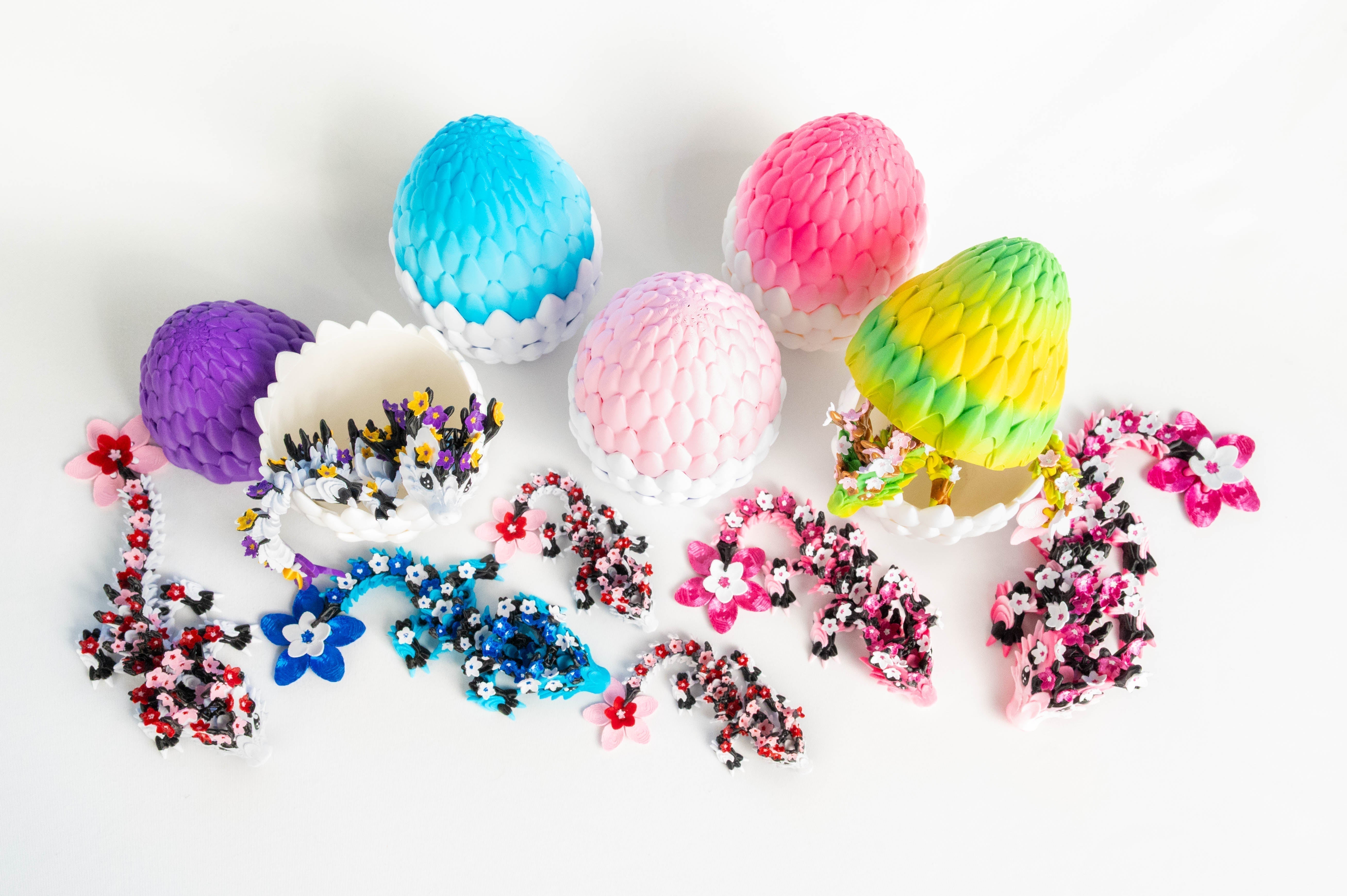
A 3D dragon is a collectible dragon figure created using 3D printing technology. The most popular style, articulated dragons, feature moveable joints throughout their entire body that let you pose them in unlimited positions. They're printed in one piece using a technique called "print-in-place," which means the dragon emerges from the printer already assembled with working ball-and-socket joints. Many people also search for 'Flexi Dragons' or '3D flexi toys', these are essentially the same as articulated dragons.
Most 3D dragons are made from PLA (polylactic acid) plastic, a plant-based material that's safe, durable, and flexible enough for smooth joint movement. They range from 10cm pocket-sized fidgets to 1 metre display pieces, with dozens of interlocking segments running from head to tail. Each segment moves independently, letting you curl the tail, spread the wings, arch the back, or coil the dragon into any pose you can imagine.
Why people love them: They're tactile fidget toys with that satisfying clicky feel between segments. They're display pieces that you can repose whenever you want a different shelf personality. And they're genuinely impressive gifts that get reactions, not polite thank-yous.
You've probably seen them on social media or heard someone rave about "that bendy dragon." By the end of this guide, you'll understand exactly what makes these dragons special, how they're made, the different types available, and how to choose your first one.
What Makes a 3D Dragon "Articulated"?
Articulated dragons are 3D printed figures with moveable joints throughout their entire body. Unlike static figurines that sit in one fixed pose, articulated dragons have joints, and interlocking segments that let you bend, twist, and position them however you like.
Think of them like action figures, but with an organic, flowing design. Instead of stiff plastic limbs that click into place, articulated dragons have smooth, continuous joints that mimic how a real dragon's body might move. You can curl their tail around your finger, spread their wings wide, arch their back, or coil them into a sleeping position.
Why articulation matters:
- Tactile satisfaction – That satisfying click between each segment is what people mention most in reviews. They're genuinely fun to fidget with.
- Display flexibility – Same dragon, infinite shelf personalities. Pose it fierce on Monday, sleepy on Friday.
- Personal expression – Every owner poses their dragon differently. It becomes uniquely theirs.
The technical magic is in how they're made. Most articulated dragons are created using a technique called "print-in-place," where the dragon emerges from the 3D printer already assembled with working joints. No glue, no assembly required. Most dragon segments are connected by chain-like links which means that articulated dragons are simply chains in the shape of dragons.
The Different Types of 3D Dragons
Not all 3D dragons are created equal. Understanding the main types helps you choose the right one for your needs.
Flexi Dragons (Articulated/Print-in-Place Style)
These are the classic articulated dragons most people picture. They feature a flexible spine with dozens of interlocking segments running from head to tail. Each segment moves independently, giving the dragon that signature fluid, poseable quality.
Flexi dragons arrive fully assembled and ready to pose straight out of the box. They're designed to be handled, fidgeted with, and repositioned constantly without wearing out. This is the style Turtle Creations specialises in: dragons that are durable enough for everyday play but detailed enough for serious collectors.
Segmented Dragons
Some 3D dragons are printed in separate pieces that snap or click together during assembly. These designs often prioritise extreme detail or larger scale over immediate playability. They're more like model kits than fidget toys.
While beautiful, segmented dragons require patience to assemble and tend to be more fragile once built. They're best suited for display rather than hands-on interaction.

Baby Sunflower Dragon with segmented body connected by links.
Hybrid Designs
A growing category includes dragons with articulated bodies plus additional moving features like flappable wings, swiveling heads, or poseable legs. These combine the fidget appeal of flexi-style joints with the engineering creativity of action figure design.
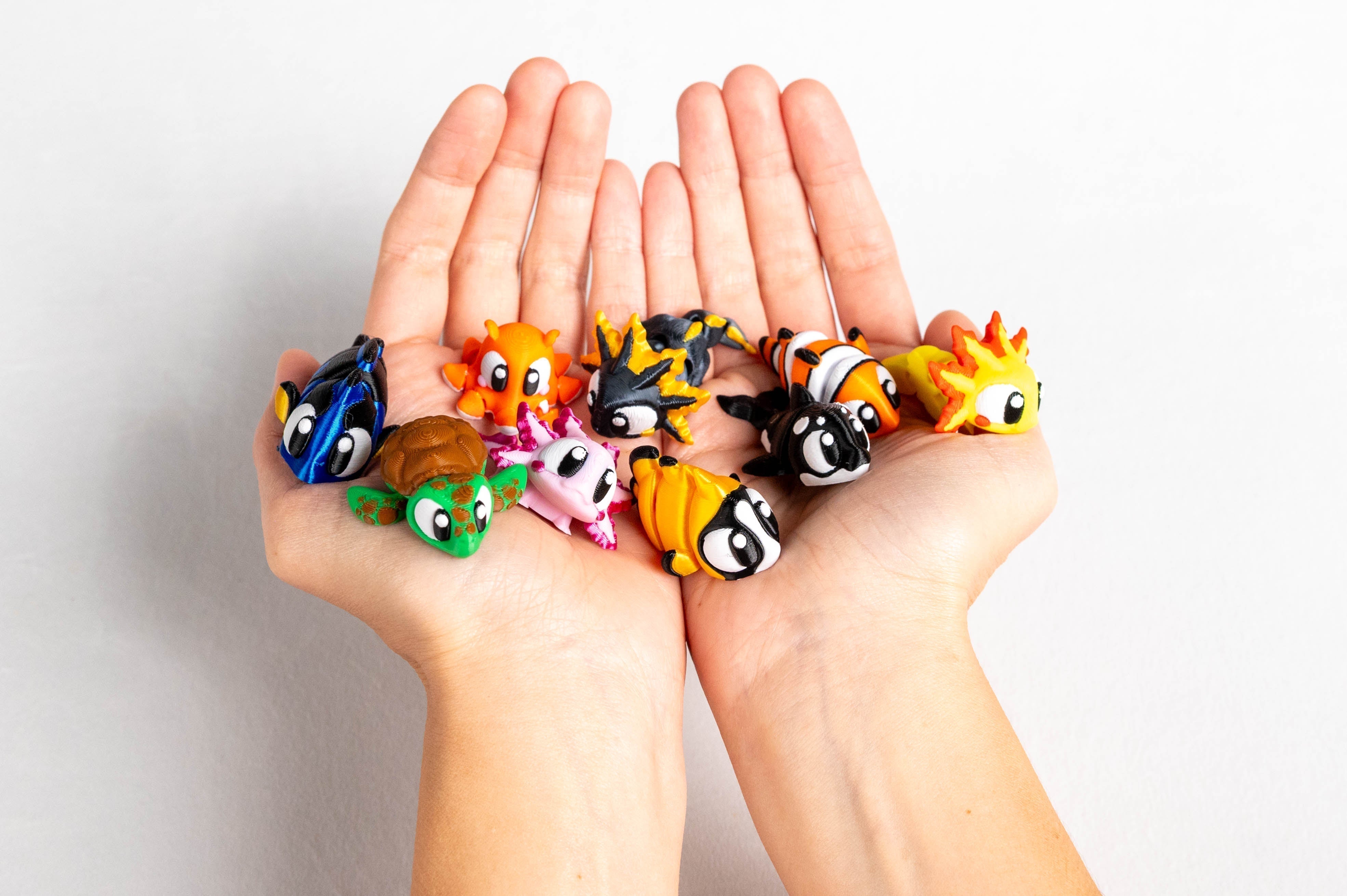
We actually use this hybrid approach for some of our Fiddlies which can turn their heads around.

Beagle Dog Fiddly with a head that rotates.
Why TC focuses on flexi-style articulation: They arrive ready to enjoy. No assembly frustration, no fragile connection points, just a dragon that works the moment you open the package. For gifting, that immediate satisfaction matters.
Why Collectors Love 3D Articulated Dragons
After 2,500+ reviews and tens of thousands of families across NZ, AU, and the US, clear patterns emerge in why people keep coming back for more dragons.
The Fidget Factor
"So satisfying" is the phrase that shows up most in customer reviews. Articulated dragons aren't just visually appealing, they're physically satisfying to hold and manipulate. The smooth movement between segments, the gentle resistance when you bend the tail, the clicky feedback when you flex the spine: it all adds up to something genuinely calming.
People keep them on their desks during video calls and reach for them while reading or thinking. They occupy your hands without demanding attention, which makes them ideal fidget companions.
Display Versatility
A static figurine sits on your shelf in one pose forever. An articulated dragon becomes whatever you need it to be. Fierce and upright when you're feeling energetic. Coiled and sleepy when you need calm. Wrapped around a plant pot, perched on a monitor, or guarding a stack of books.
The same dragon can look completely different depending on how you pose it. That variety keeps them interesting long after purchase.
Gifting Appeal
Articulated dragons get reactions. Not polite "oh, nice" reactions. Genuine surprise and delight. The combination of beautiful detail and immediate interactivity makes them memorable gifts.
They have wide appeal. Some people love the fidget aspect, others appreciate the craftsmanship and collectibility. That makes them a safe gift choice when you're not sure exactly what someone wants.
Collectability
Once someone owns one articulated dragon, they tend to want more. Different colours, different sizes, different poses on different shelves. The 3D printing community has created thousands of dragon designs over the years, which means there's always something new to discover.
Our Customer Show Their Love Of Dragons
Turtle Creations holds a 4.9/5 rating across 2,500+ reviews. Tens of thousands of families have already given our dragons a home. That consistency speaks to the quality and satisfaction people experience with well-made articulated dragons.

One of our customers showing her photo of her new Baby Heart Dragon.
Zoe: They have far exceeded expectations. My daughter will play with her dragons, axolotls, bearded dragons, and now fiddlies every single day without fail. All other toys only get chosen every few days or weeks. Certainly a family favourite.
Fairy: No one has ever come close to seeing those colours just blend so seamlessly! All the individual pieces are so detailed and quality-made, like a little masterpiece! As a children’s entertainer, teacher and mama, this beautiful piece will be treasured forever!
Tracey: Joints all most smoothly and fits in the egg, with a little wiggling too get the wings angled right. Such a beautiful product and I would 100% buy more in future.
These and other verified reviews can be found on our review page.
How 3D Articulated Dragons Are Made
Understanding the creation process helps you appreciate what you're getting (and why cheap knockoffs don't measure up).
The 3D Printing Process
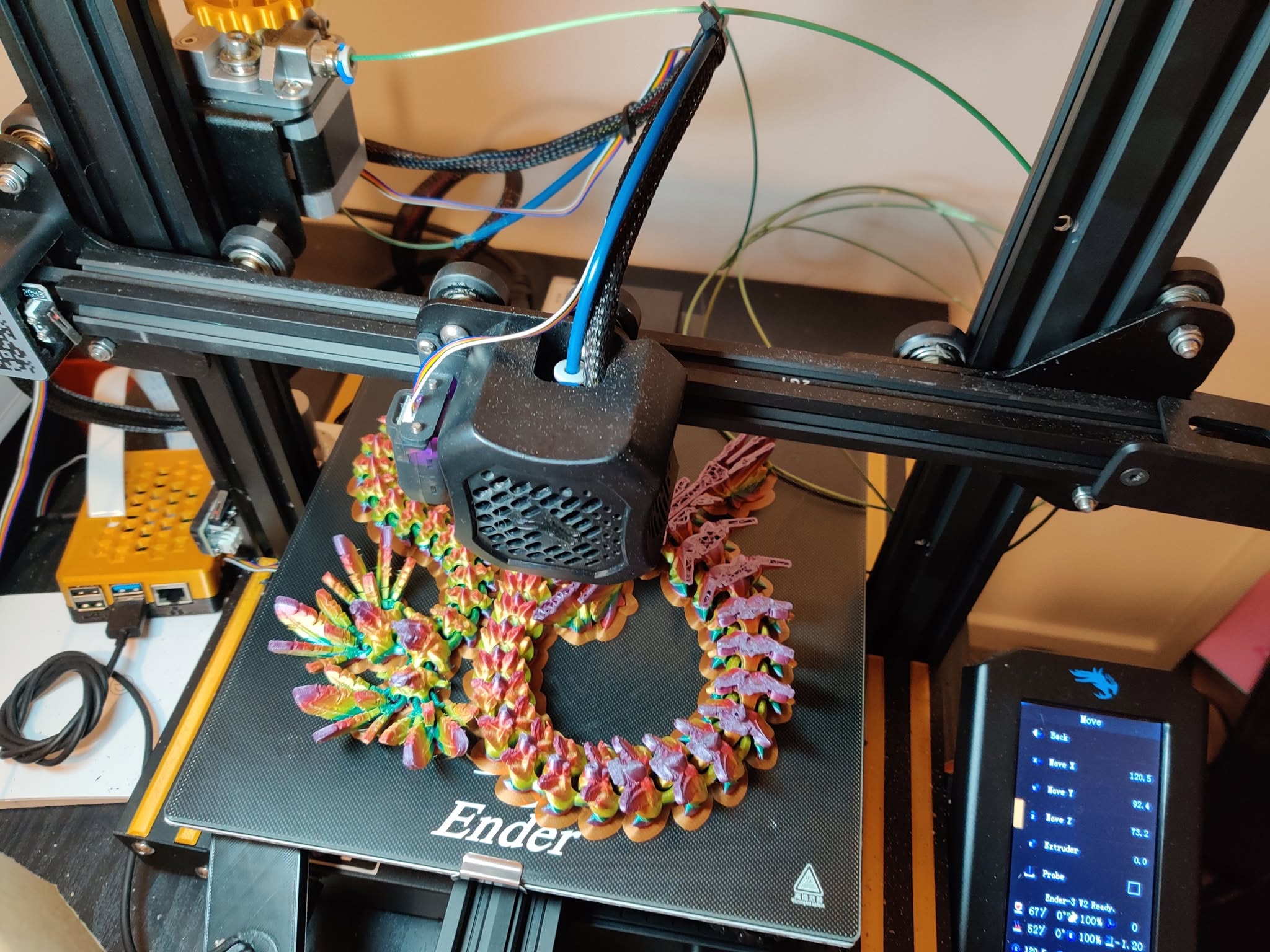
3D printing builds objects layer by layer from melted plastic filament. For articulated dragons, the printer lays down hundreds of thin layers to create the body, joints, and details all in one continuous print.
The magic happens in how the printer handles the joints. Special support structures connect moving parts during printing, then break away cleanly afterward to leave functional ball-and-socket joints. This "print-in-place" technique means the dragon comes off the printer already assembled and articulated.
Why PLA Plastic Is Ideal
Most articulated dragons use PLA (polylactic acid) filament. It's derived from plant starches like corn, which makes it more environmentally friendly than traditional plastics. But the real reason it dominates the articulated dragon world is its mechanical properties.
PLA is rigid enough to hold detail and shape, but has just enough flex to allow smooth joint movement without cracking. It prints cleanly at lower temperatures, which reduces warping and improves surface finish. And it's durable enough for regular handling without wearing out quickly.
Craftsmanship Beyond the Printer
Even though 3D printer marketing sometimes make it look like you just buy a 3D printer and you are ready to go, in reality turning a 3D model into a finished dragon is more complicated process when done right.
Turtle Creations tests different specific PLA brands a colours for the best results that our customers love so much.
One 3D model can be printed in many different ways with different quality results. Turtle Creations uses only high-quality materials, and we focus on sturdy durable prints without large visible layer lines.
There are always several prototypes before a dragon is ready to be added to our website and shared with our family of dragon trainers. We put a lot of love and care into each dragon that we make.
Raw prints aren't ready to ship. Every dragon needs cleaning: removing support material, smoothing rough edges, checking every joint for smooth movement. At Turtle Creations, each dragon is inspected and hand-finished before it leaves.
Turtle Creations craftsmanship is what creates a dragon worth keeping which is so unlike the massproduced cheap unlincensed copies that sometimes break just on their way to you.
Choosing Your First 3D Articulated Dragon
If you're new to articulated dragons, these considerations will help you pick the right one.
Size Matters (More Than You'd Think)
Smaller dragons (15-20cm) are perfect fidgets. They fit in your hand, tuck into a pocket, and feel satisfying to manipulate during video calls or while reading. Great for anyone who wants something portable.
Medium dragons (20-25cm) offer the best balance. Substantial enough to display impressively, small enough to handle comfortably. This is the sweet spot for most first-time buyers.
Larger dragons (25cm+) are statement pieces. More segments means more articulation, which translates to smoother curves and more dramatic poses. These command attention on a shelf.
Practical tip: If you're buying for someone else and not sure which size, medium is the safe choice. Big enough to feel special, not so large it dominates their space.

Baby Butterfly Dragons and their sizes.
Colour and Finish Options
Colour changes a dragon's personality more than you'd expect. A Paua-Pearl dragon with purple and blue swirls feels mystical. A black dragon reads fierce and elegant. A pastel dragon seems gentle and friendly.
Rainbow and colour-changing finishes add another dimension. Because these use specialty filaments, each dragon's exact colour pattern is unique. Two "rainbow" dragons will never look identical.
Pose-ability vs Durability Trade-offs
Size matters when it comes to durability. We make our dragons to last so it is rare that we are dealing with anything breaking. The limitatios are about simple physics, larger dragons has larger joints and larger joins are harder to break.
If it's a gift for a younger user: Prioritise durability. Look for designs with thicker segments and fewer tiny details that could snap off. Regular/medium size is recommended.
For collectors and adults: Maximise the visual appeal and just the taste of the person that you are buying for.
For both: Check reviews. Well-designed dragons balance flexibility and strength.
Gift vs Personal Purchase
Buying for yourself: Start with one medium dragon in a colour you love. Live with it for a week. If you find yourself constantly picking it up and repositioning it, you'll want more.
Buying as a gift: Choose medium size, popular colour (paua pearl, rainbow...), and prioritise dragon eggs. Dragons that come in display-ready dragon eggs make better gift moments.

Baby Cherry Blossom Dragon in it's Dragon egg.
Caring for Your 3D Articulated Dragon
Articulated dragons are durable, but a few simple care practices will keep them looking and moving perfectly for years.
Gentle Posing
Joints are designed to move, but forcing them past their natural range can cause cracks or breaks. When you first get your dragon, test each joint gently to understand its limits. Most joints have a natural stop point, respect it.
Pro tip: If a joint feels stiff when new, work it gently back and forth a few times. PLA joints break in with use and become smoother over time.
Cleaning and Dusting
Dust accumulates in the gaps between segments. A soft brush (like an old makeup brush or clean paintbrush) works perfectly for getting into tight spots. For stubborn dirt, a damp cloth with mild soap will clean PLA safely.
What to avoid: Harsh chemicals, abrasive cleaners, or soaking the dragon in water. PLA is water-resistant but not waterproof. Hot water can make the plastic warp.
Display and Storage
Heat: PLA softens around 60°C (140°F). Don't leave dragons in direct sunlight on hot days, especially in cars or near windows. They won't melt, but they can warp or lose joint tension.
Cold: Not an issue. PLA stays flexible even in freezing temperatures.
Shelf life: Properly stored, PLA dragons last indefinitely. UV exposure can fade some colours over years, but normal indoor display won't cause problems.
Repairs (If Needed)
If a segment cracks or a joint breaks, super glue (cyanoacrylate) bonds PLA permanently. Clean both surfaces, apply a tiny amount, hold together for 30 seconds. The repair will be stronger than the original plastic.
For ball joints that have become loose over time, a thin layer of clear nail polish on the ball part can restore friction and tightness.
Conclusion
3D articulated dragons combine engineering, artistry, and playfulness into something genuinely special. They're fidget toys that happen to be beautiful. Display pieces that happen to be interactive. Gifts that get genuine reactions instead of polite thank-yous.
Whether you're drawn to their satisfying tactile movement, their shelf-commanding presence, or the simple joy of repositioning a tiny dragon every morning, there's a reason tens of thousands of families have already given them a home.
Before each dragon leaves New Zealand, we clean behind its ears, check every scale, and pack it with a personal letter and a free gift for the journey. Ready for adoption.

Share:
Fidget Toys for Adults: Fidgeting, Stimming, and Focus
About the author
Martin Novak
Co-founder & Chief Dragon Trainer · Turtle Creations
Martin and Petra are two New Zealanders, who founded Turtle Creations in 2022 and grew its business from a single 3D printer to a well-respected 3D printing company. Martin handles most of the technology related to 3D printing, automation, and the website. He now has years of experience crafting dragons and fidget toys which he now shares on the Turtle Creations blog.